Dewayz: a website in three languages for moving to Germany
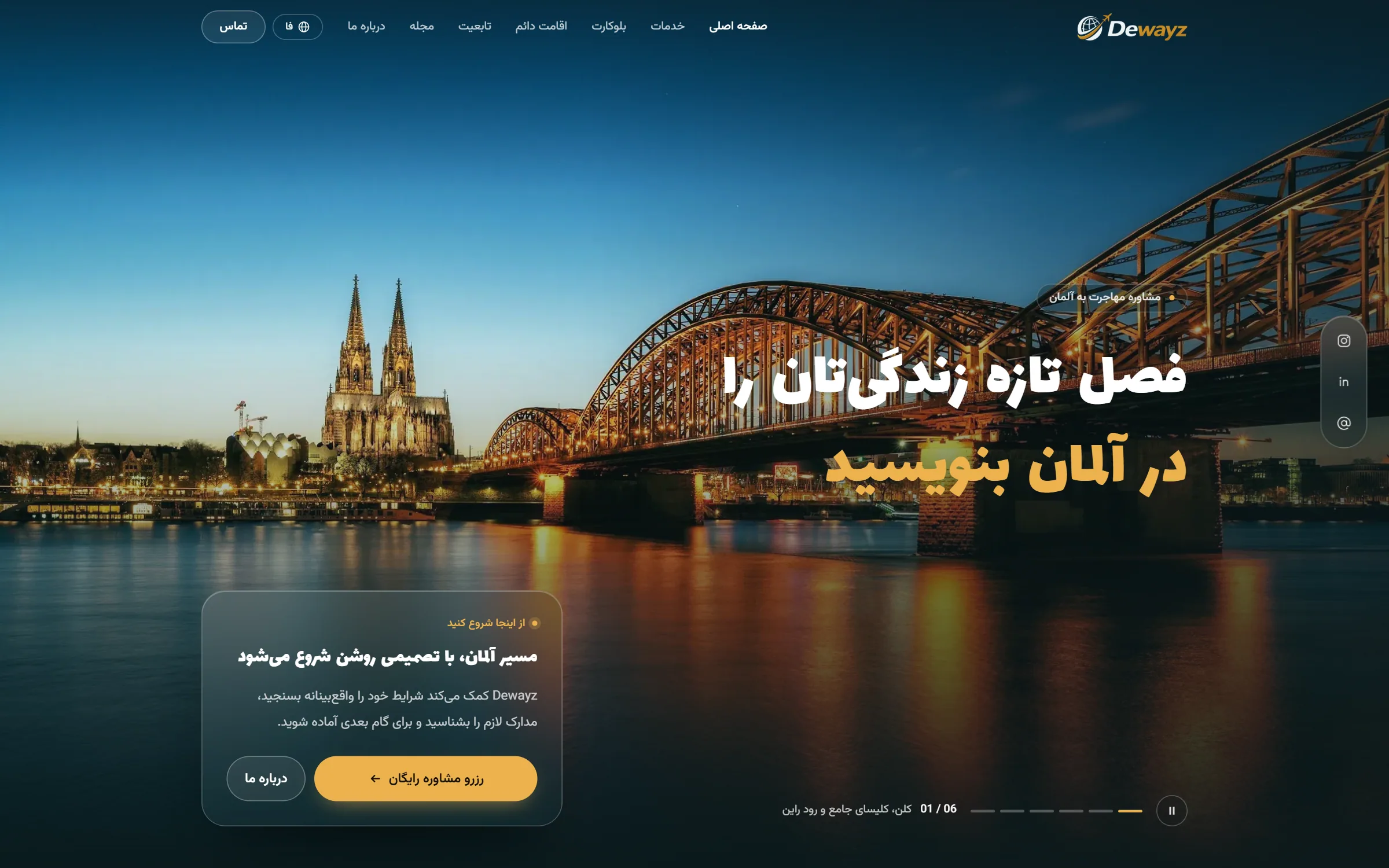
A website for Dewayz, which advises people in Iran, Türkiye and the UAE on moving to Germany, live on dewayz.com since 12 October 2026. It runs in Persian first, then English and Arabic, across 81 pages that explain the routes, set out Dewayz's four services and answer common questions in ten guides.
The challenge
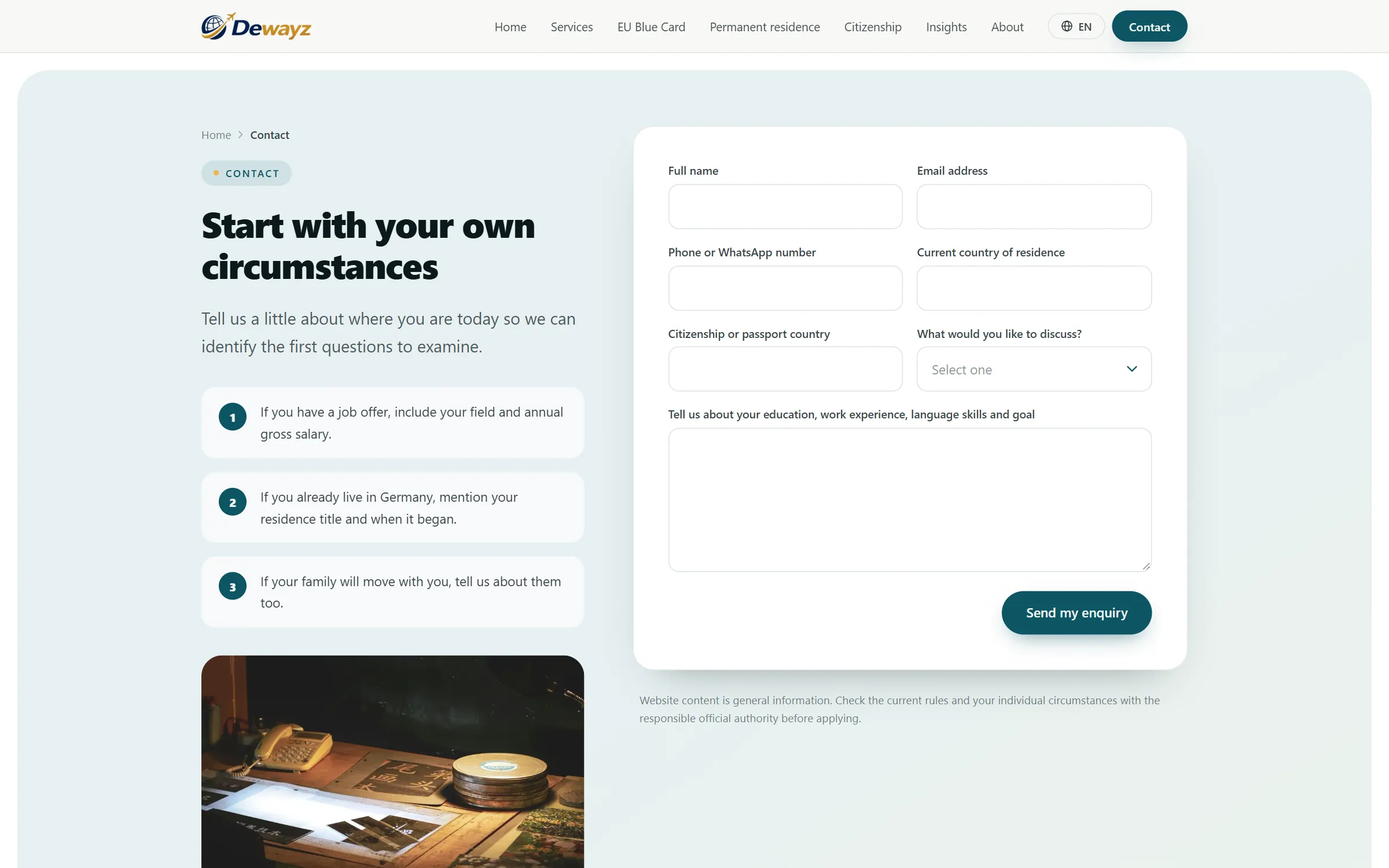
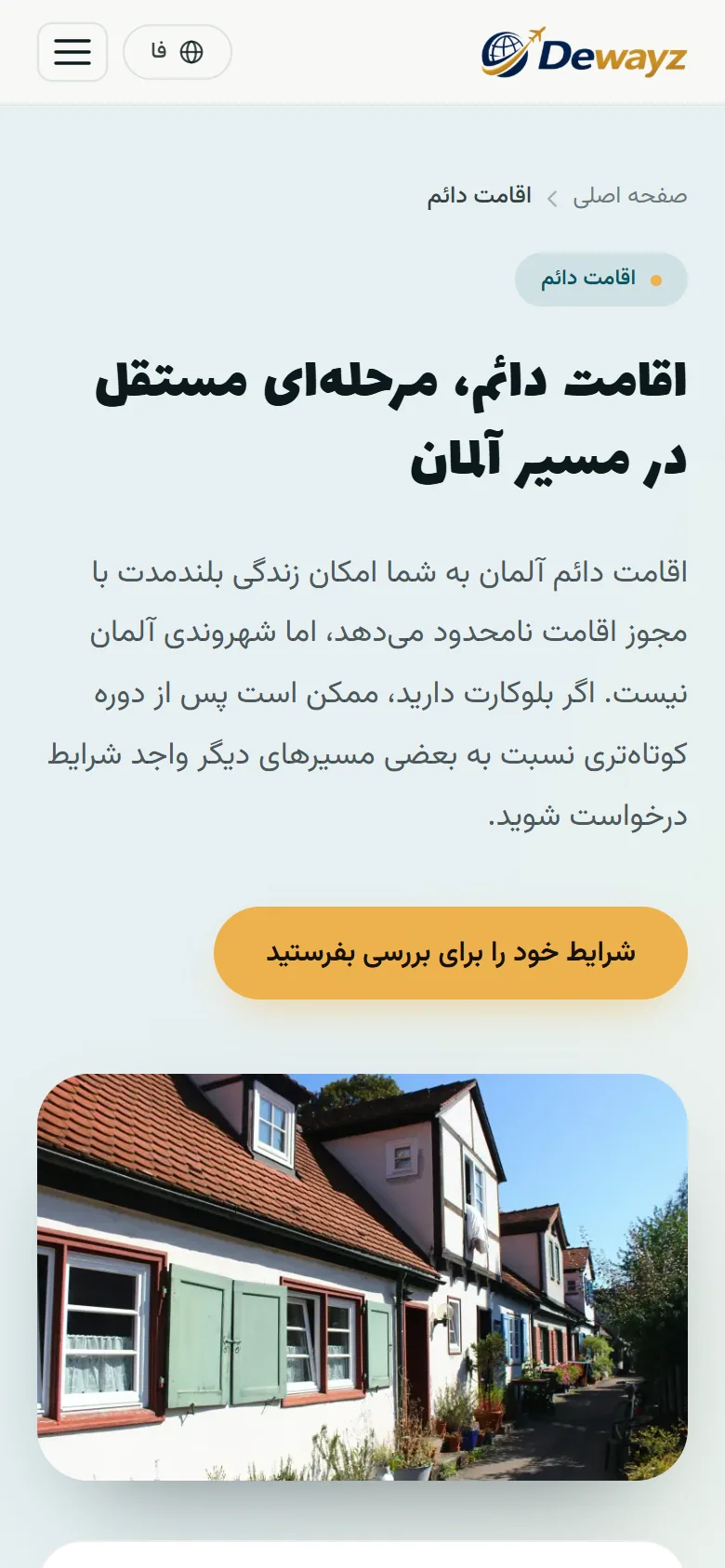
Dewayz advises people in Iran, Türkiye, the UAE and the wider region on moving to Germany, and before this project dewayz.com carried no site of its own. Most of its clients read Persian, so the site had to read right to left in Persian and Arabic as well as left to right in English, with each page under the same path in all three. It had to explain the EU Blue Card, the other work routes, permanent residence, citizenship and family reunification plainly, without promising an outcome that only a German authority can decide, and it had to say what Dewayz itself does for a client. It also had to be easy for search engines and AI assistants to read and quote.
What we did
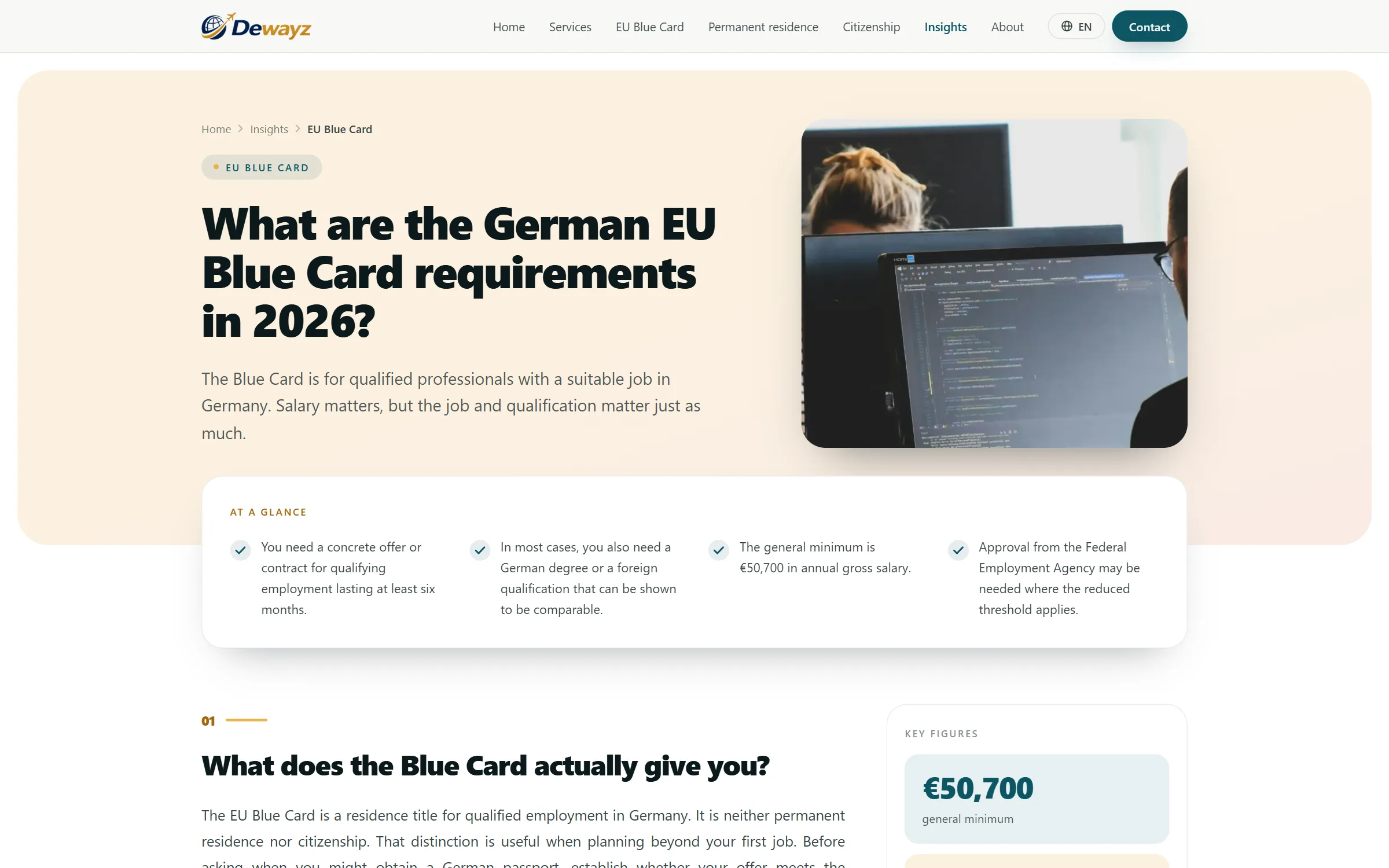
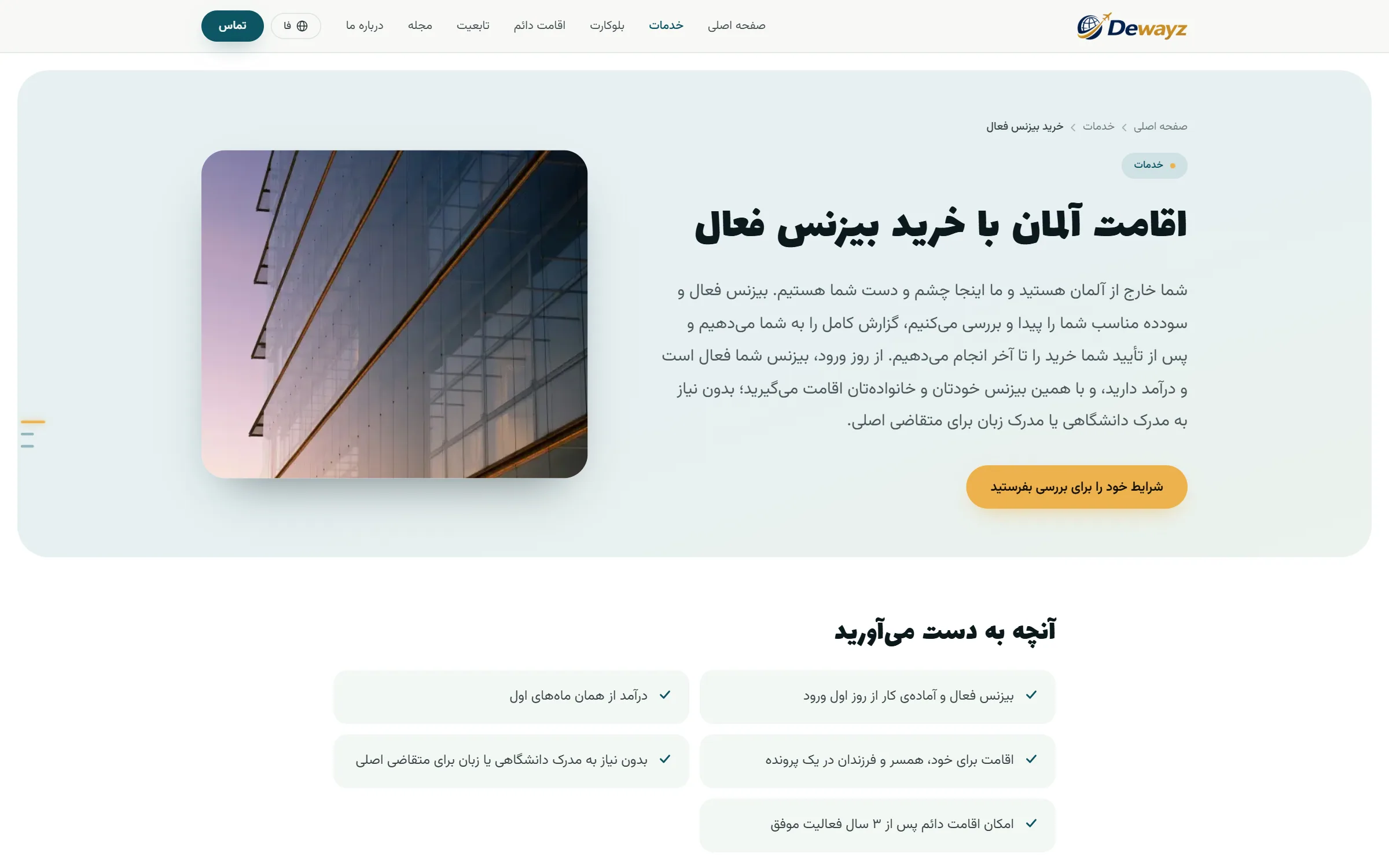
The coming-soon page went up first, on 6 October 2026, in Persian and English with a countdown, a notify-me form and a contact form, in the petrol and saffron palette we had proposed for the brand. The full site is one Next.js application: its ten pages and ten guides in each language are rendered from one parsed content package rather than retyped, Persian is the default, and Persian and Arabic are set right to left in their own typefaces. Route pages and guides read beside a rail with a contact card, the official sources and, where the copy gives them, the key figures, and their at-a-glance cards, cautions and checklists are lifted word for word from the copy, which a script checks. When Dewayz's team sent its sales guide, each of the four services it describes became a page of its own: a Blue Card job contract, residence through buying a business, property with residence, and study. The contact form and the newsletter write to a database the website can add to but never read from, and no IP address is kept. Every page carries structured data and hreflang links, robots.txt welcomes 18 AI crawlers by name, llms.txt and a full-text edition are generated from the content at every build, and IndexNow announces all 81 addresses.
What we built
- Live on dewayz.com since 12 October 2026
- Persian first, with English and Arabic on the same paths
- 81 pages, 27 in each language
- 10 guides, each with its review date and official sources
- Four service pages built from Dewayz's own sales guide
- Structured data, llms.txt and 18 AI crawlers welcomed by name
The outcome
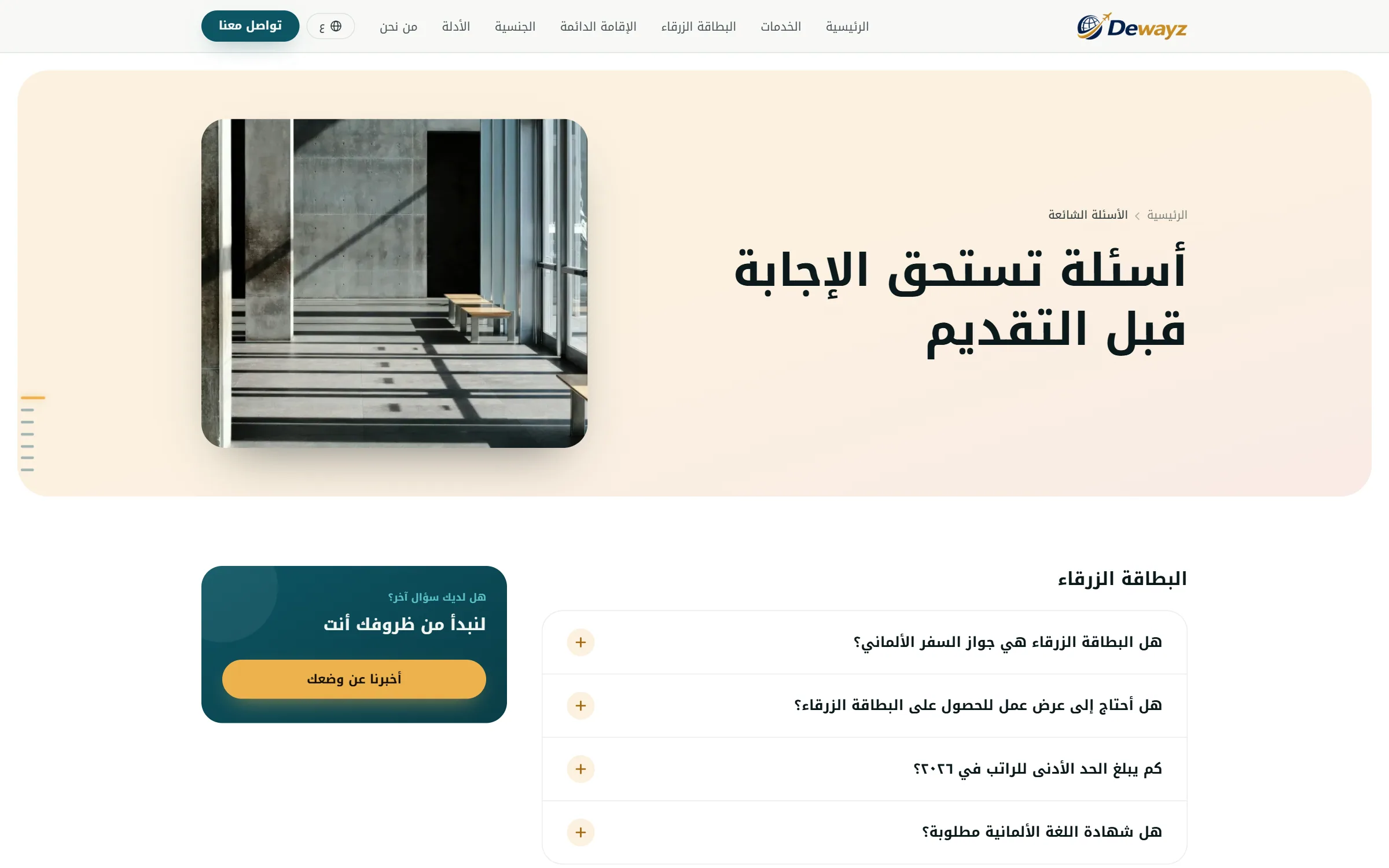
The full site replaced the coming-soon page on dewayz.com on 12 October 2026, and a second round on 20 October added the four service pages, the privacy and terms pages and one linked graph of structured data on every page. The sitemap lists 81 addresses, 27 in each language: the home page, a services overview, five route explainers, four service pages, ten guides and their index, an FAQ of 11 questions in six topics, and the about, contact, privacy and terms pages. Each guide shows the date its information was reviewed and links to its official sources, and the footer of every page calls its content general information and asks readers to check the current rules with the responsible authority before applying. The privacy page names every field each form records and says plainly that no IP address is kept.
Inside the work
Have something similar in mind?
Send us the brief. We'll tell you honestly whether we're the right studio for it.
No pitch decks until we understand the problem.
hello@4ai.ae