Ask most people how they spot AI video and they will say something vague about faces. In practice it is rarely the faces. It is continuity, physics, and sound. And all three are production problems, not model problems.
Where synthetic footage gives itself away
Continuity. A jacket changes its button count between shots. A room gains a window. Models generate each clip independently; nothing enforces that shot four remembers shot two.
Physics. Weight is the hardest thing to fake. Liquids that pour too slowly, fabric that does not settle, a hand that passes through a handle by two millimetres. Audiences cannot always name it, but they register it.
Sound. This is the one nobody budgets for. Generated footage arrives silent or with generic audio, and a beautiful shot with wrong-sounding footsteps reads as fake immediately.
What we actually do about it
Lock the look before generating anything. We build style frames and character sheets first: palette, lens language, grain, wardrobe, the specific set. Every prompt then references a fixed visual target rather than inventing one. This is the single highest-leverage step, and it is done in a design tool, not a model.
Generate far more than we need. A usable shot rate of one in fifteen is normal, and we plan for it. Selection is where quality comes from; a pipeline that has to accept its first output has no quality control at all.
Choose the model per shot, not per project. Different models are good at different things: camera movement, human motion, texture, adherence to a prompt. Committing to one model for a whole spot means accepting its weakest category.
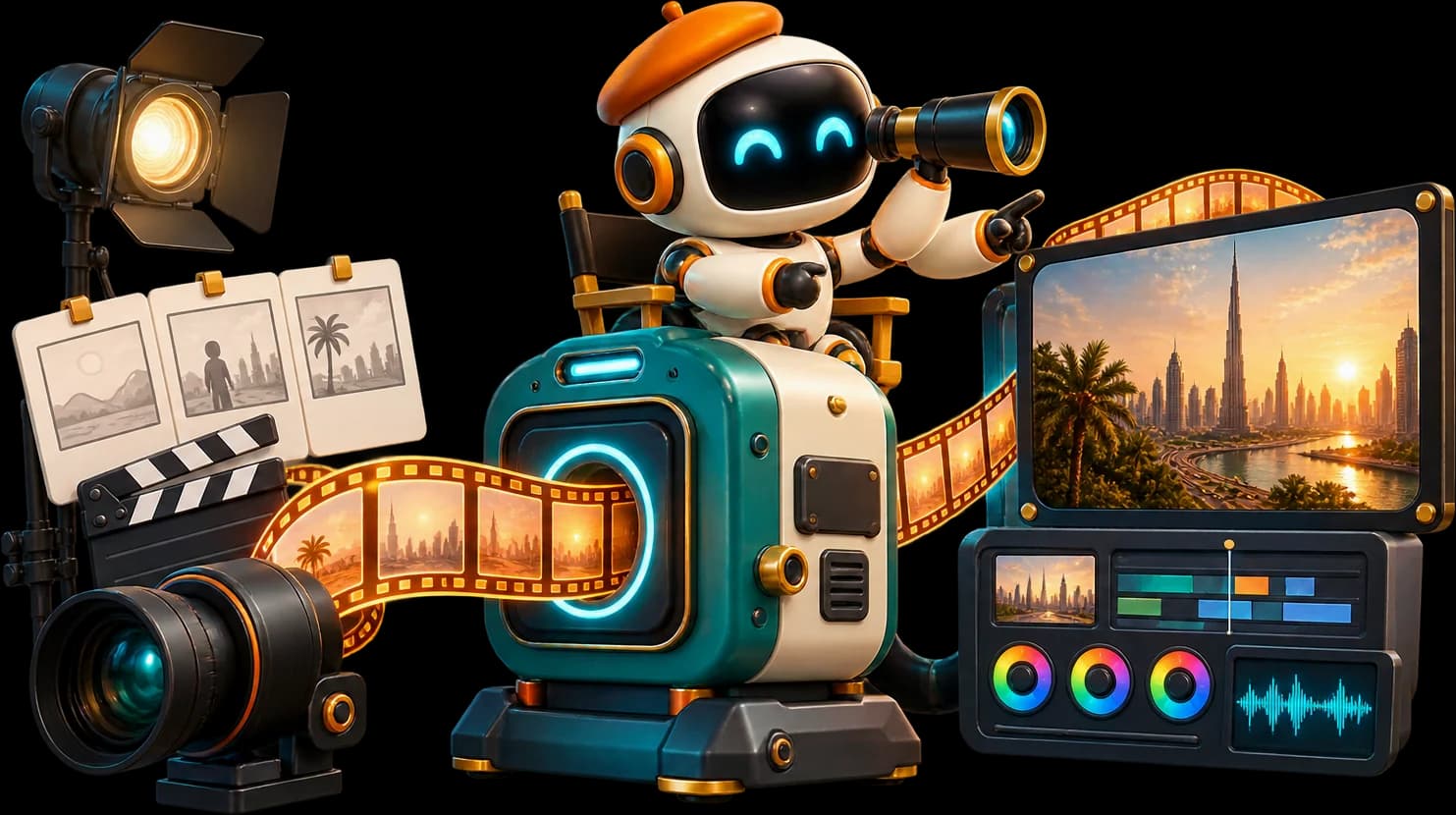
Finish like it was shot. Upscale, stabilise, remove artefacts, grade to a single look, then design the sound: room tone, foley, score written to the cut. This stage typically takes longer than generation and is what most AI video is missing.
What we do not use it for
Real products people will hold. Real staff. Anything where a viewer could compare the footage to the thing itself and notice a difference. Generated video is a solution for the impossible, the unsafe, the not-yet-built and the uneconomic, not a cheaper substitute for a camera pointed at something that exists.
Being clear about that boundary is, in our experience, what makes clients comfortable using it at all.
The practical takeaway
If your AI video looks generated, the fix is almost never a better prompt. It is a locked visual reference, a higher rejection rate, and a real post-production pass with sound. The models are already better than most people's workflow around them.