Camali Clinic: a bilingual website and the system the clinic runs on
Everything Camali Clinic runs on, in one place: a bilingual public website live since 21 September 2026, the staff console where each team answers what the site brings in, the studio the clinic publishes its own guides from, and the workspace where its team plans the month.
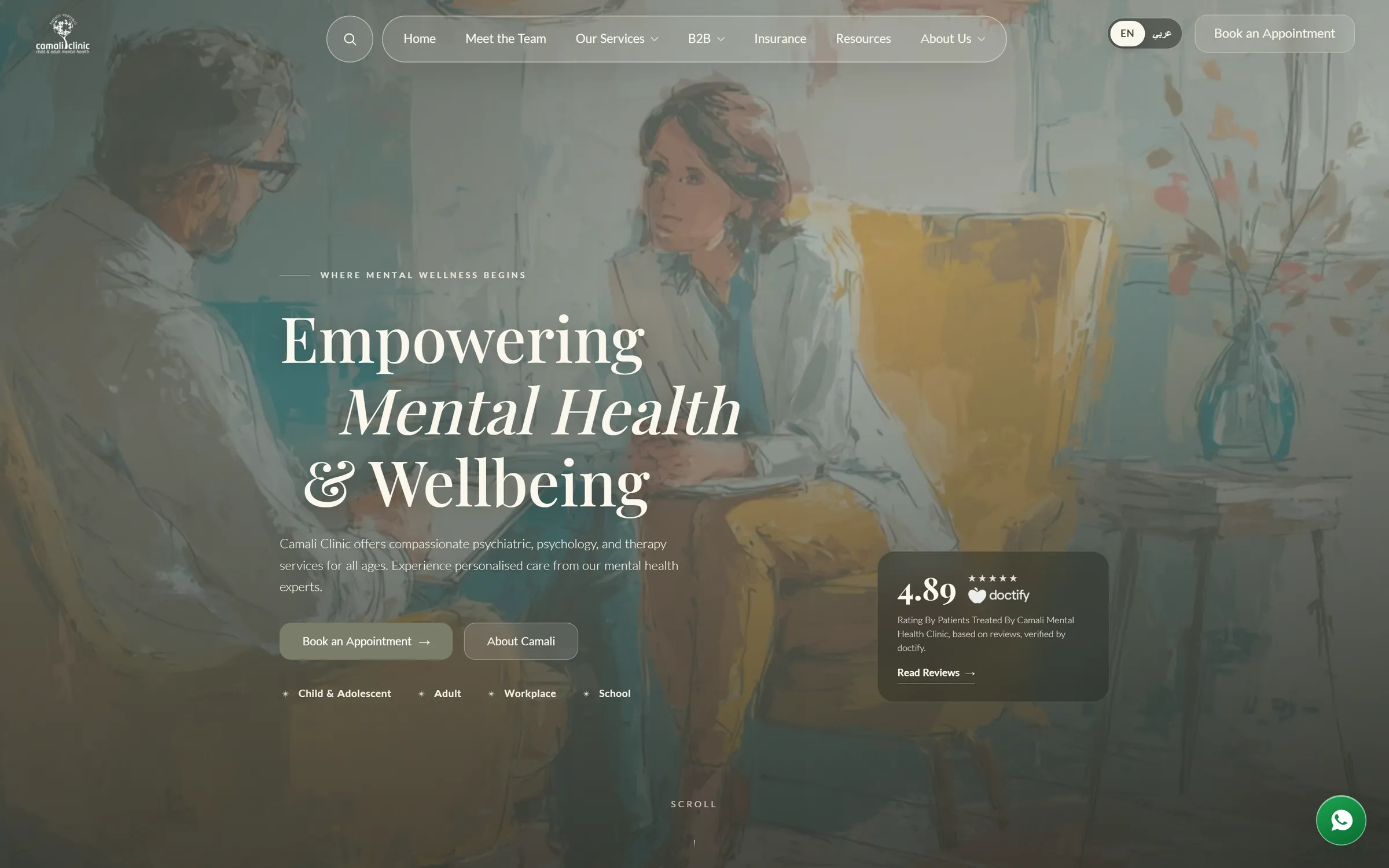
The challenge
Camali Clinic runs mental health clinics in Dubai for children, adolescents and adults, with dozens of service pages, more than thirty clinicians and a large archive of guides on WordPress. The new site had to keep the clinic's brand and wording, work in Arabic as well as English, carry its old addresses across, and let people ask for an appointment without sending health details through a web form. Behind it, every appointment request, enquiry, careers interest and event registration the site takes had to land somewhere a named team could answer it, without the clinic buying four more subscriptions and without a patient's details sitting in a shared inbox. The clinic also wanted to stop paying to have its own guides published for it.
What we did
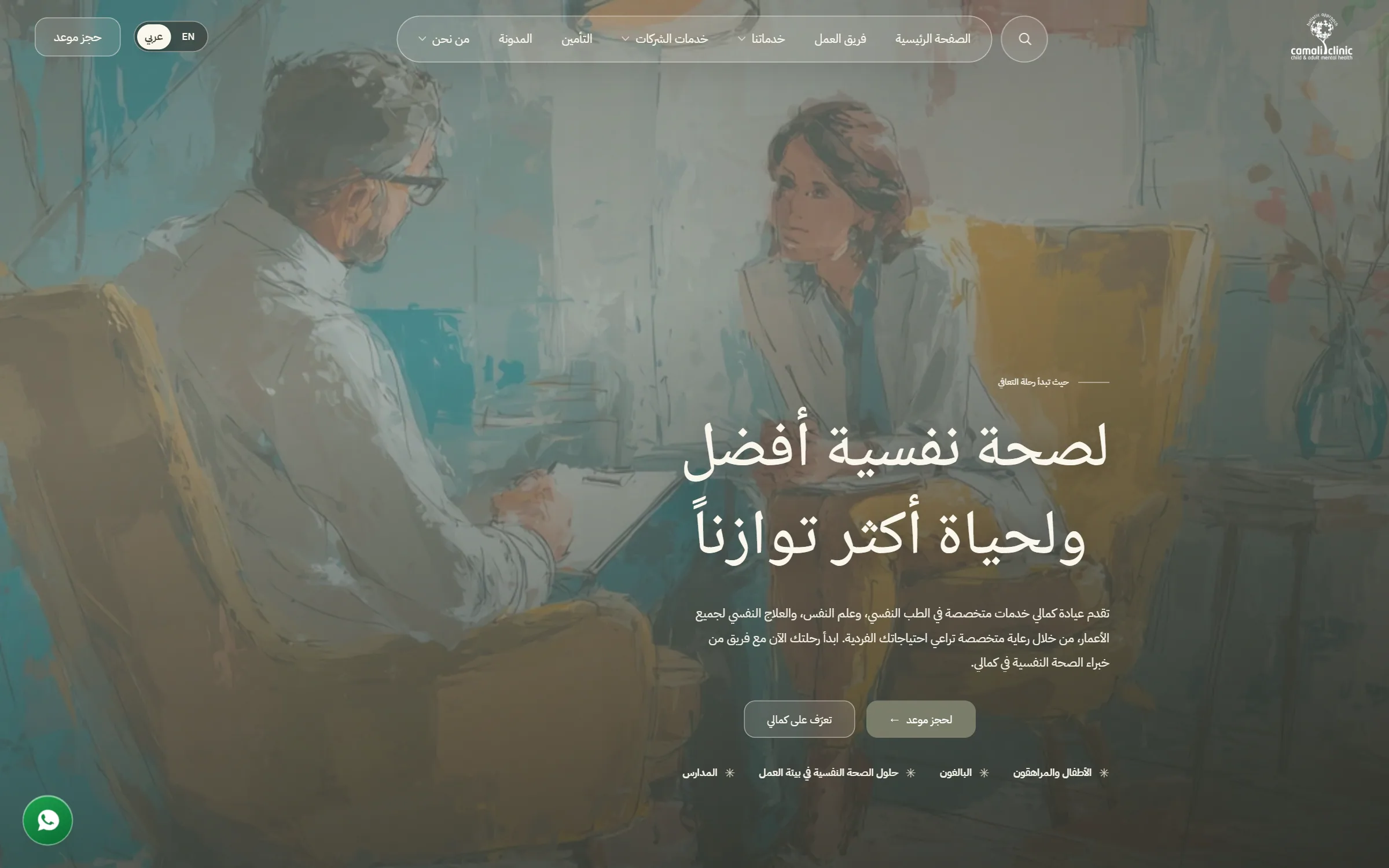
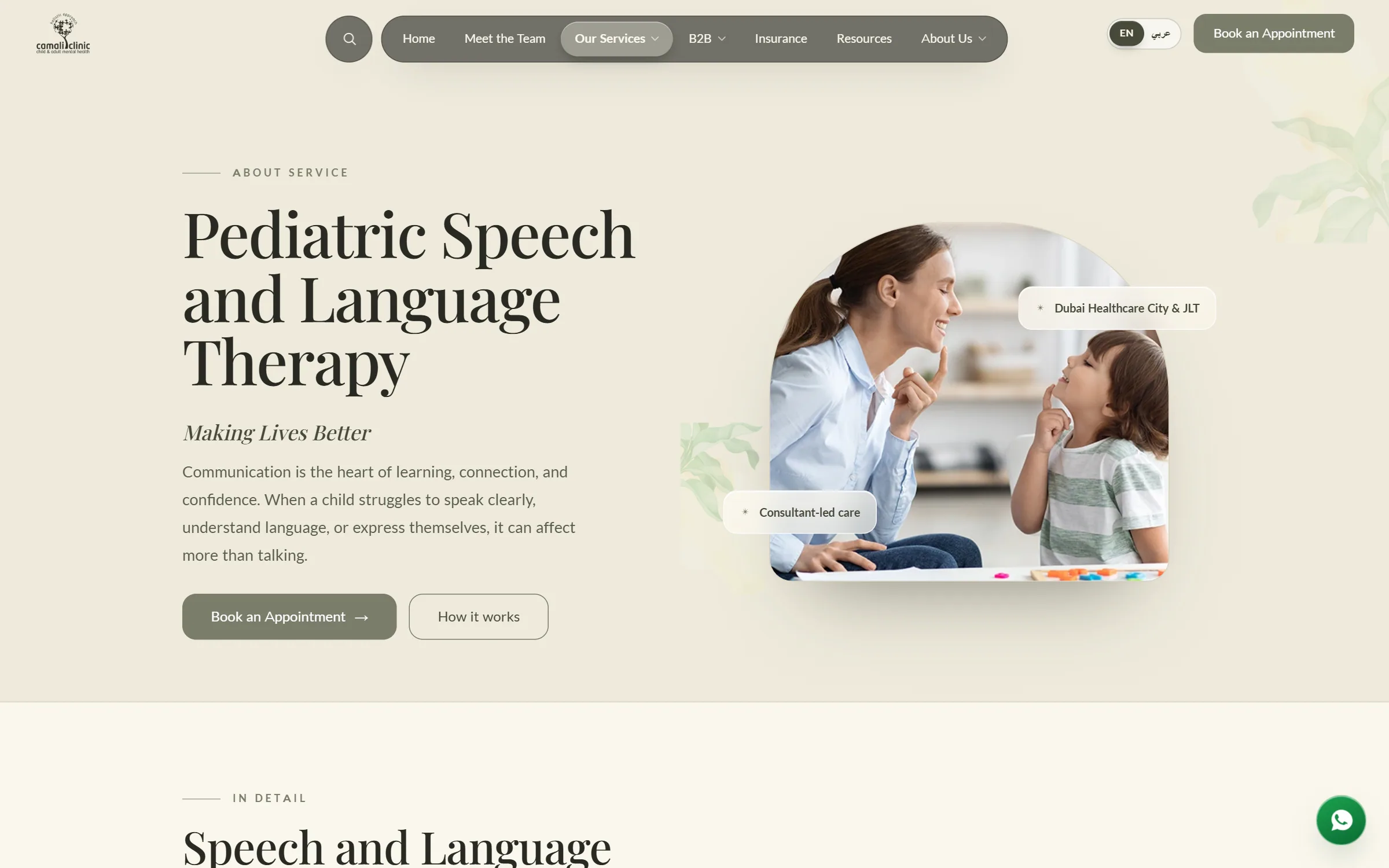
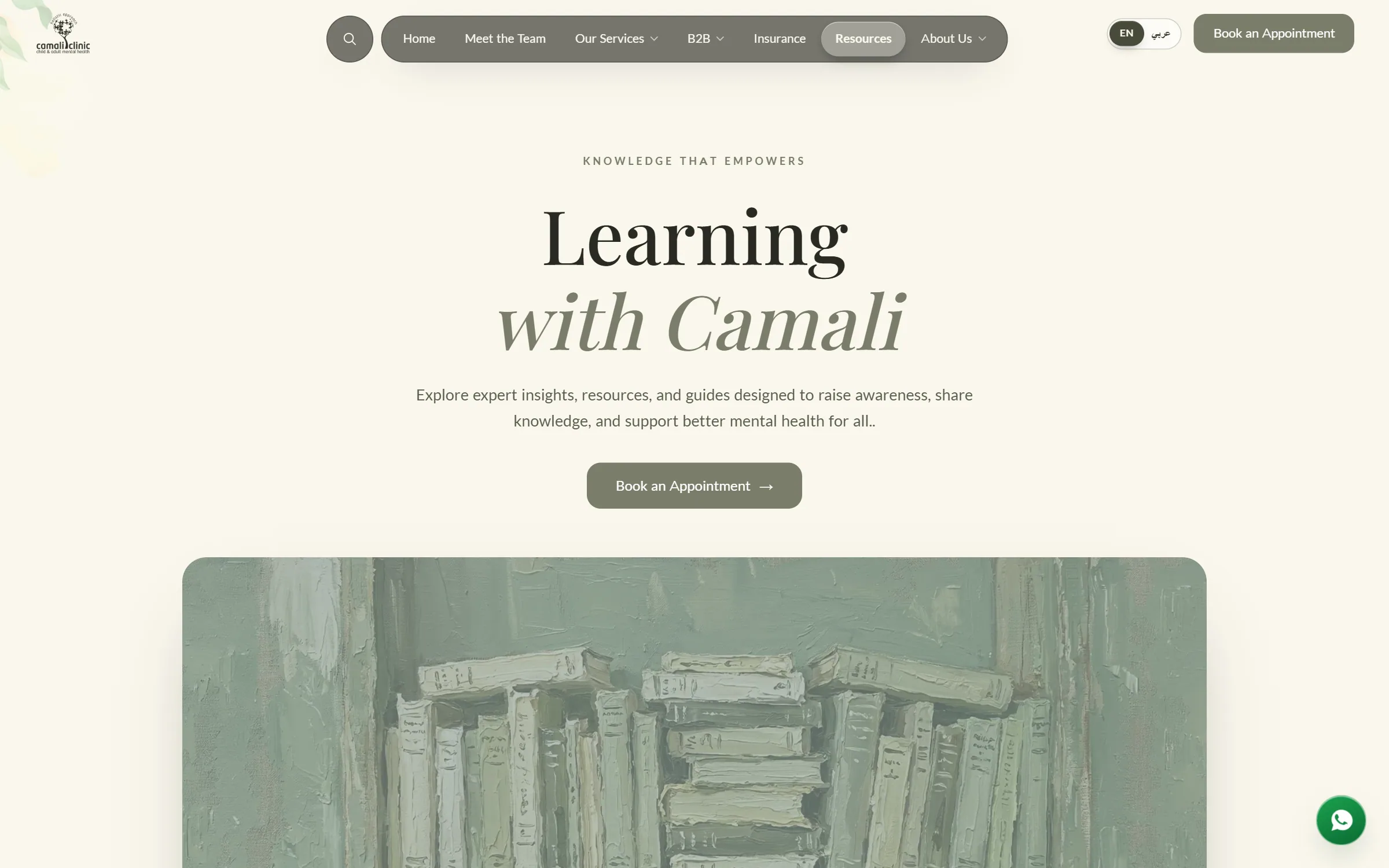
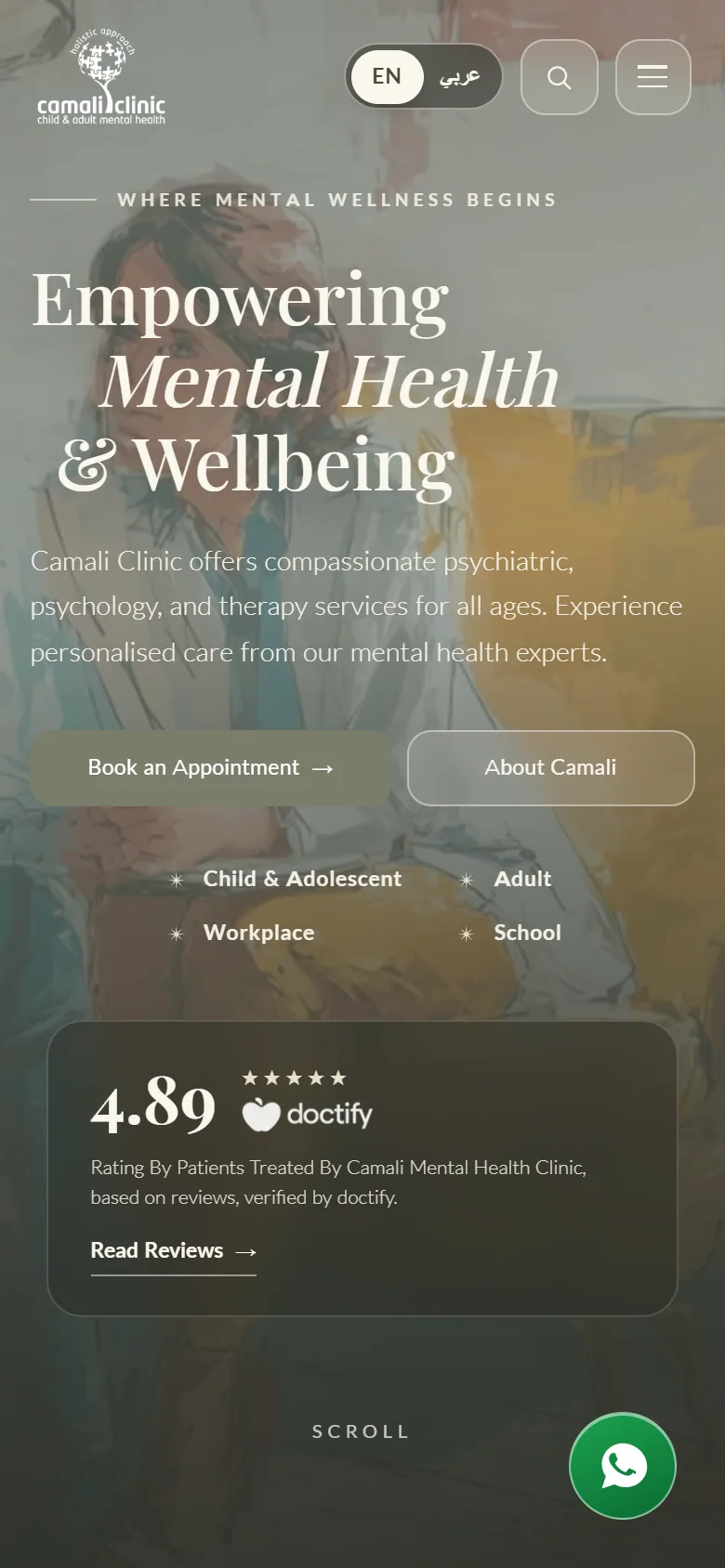
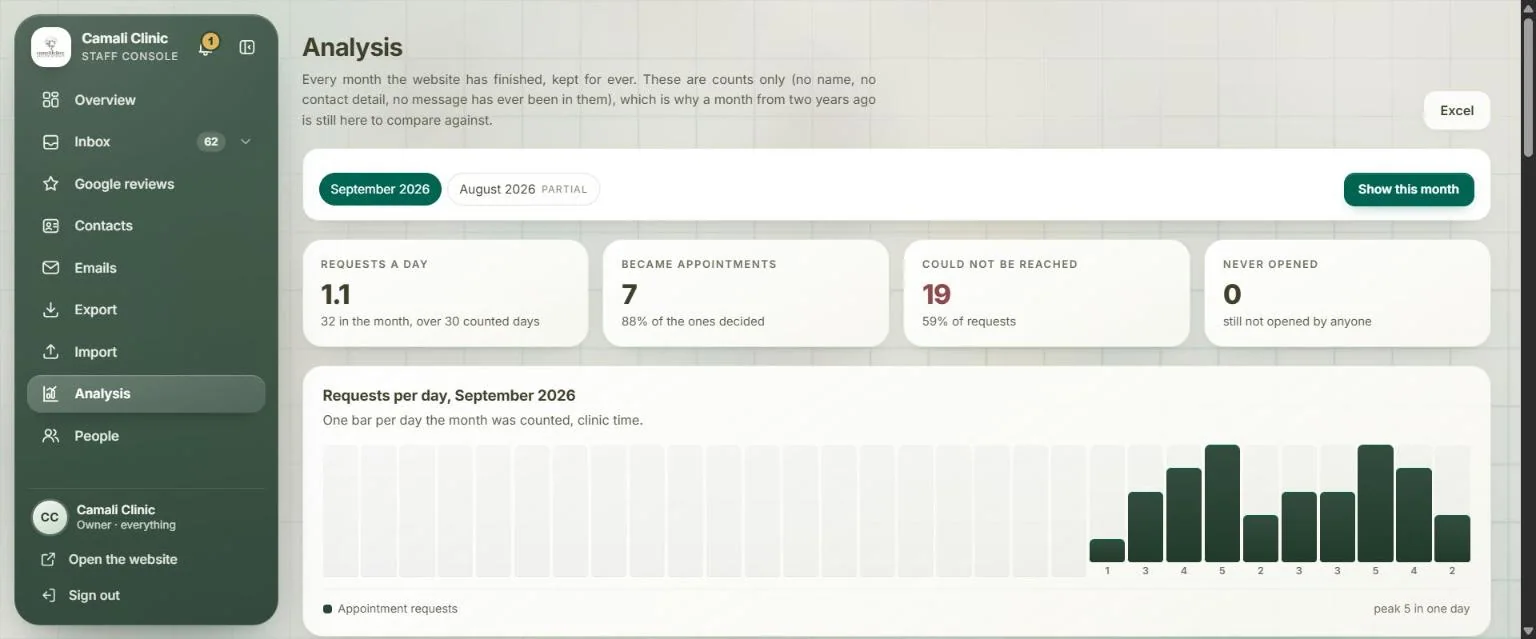
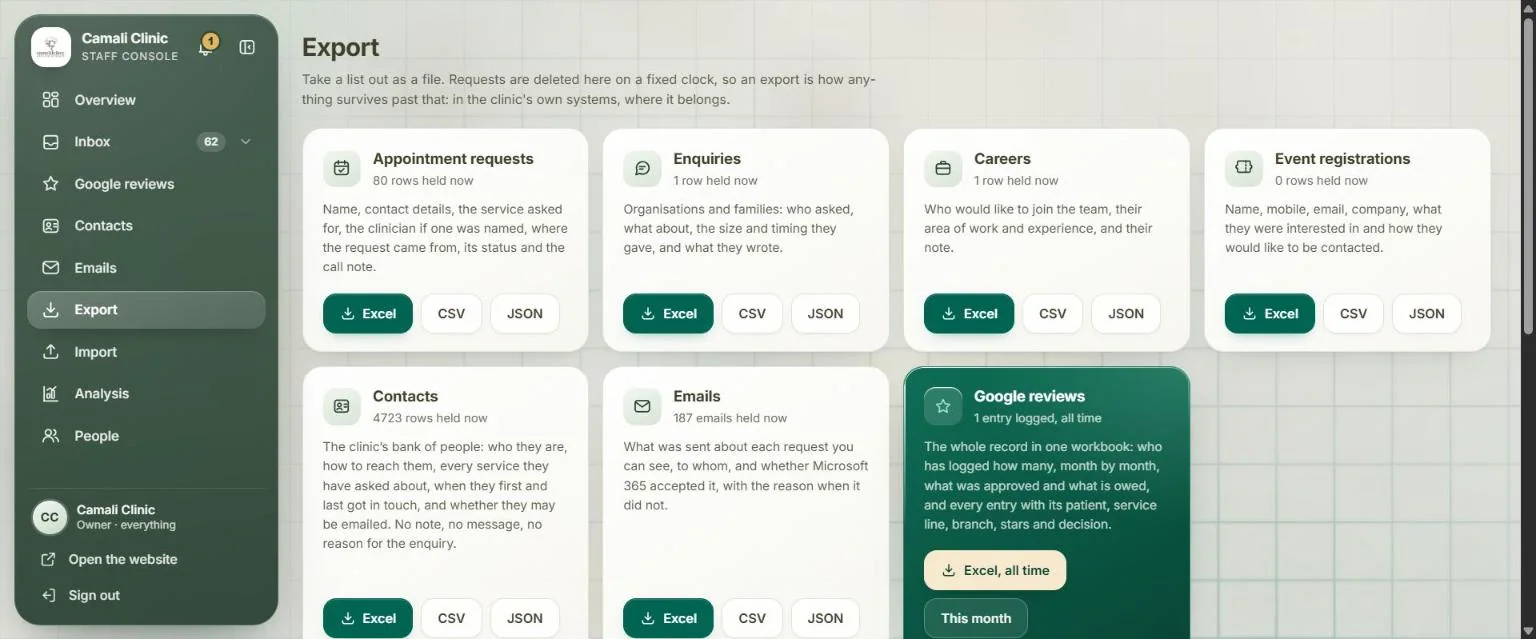
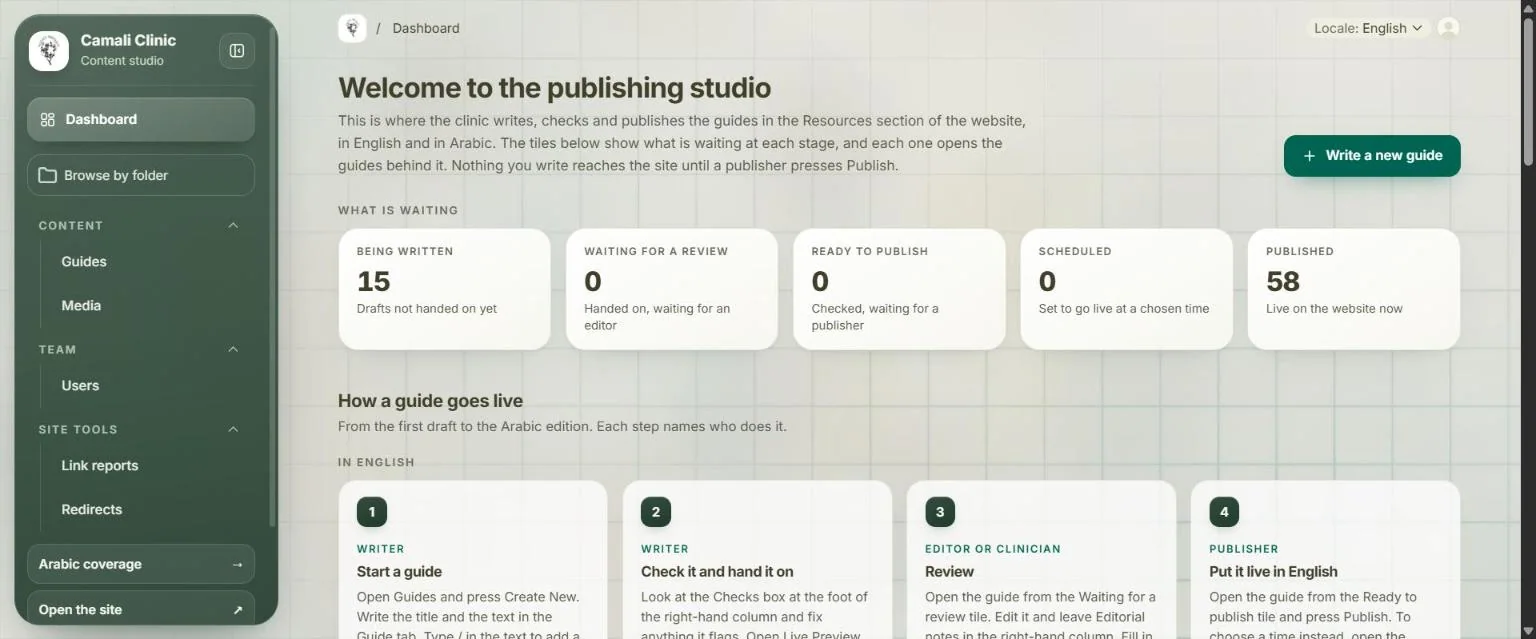
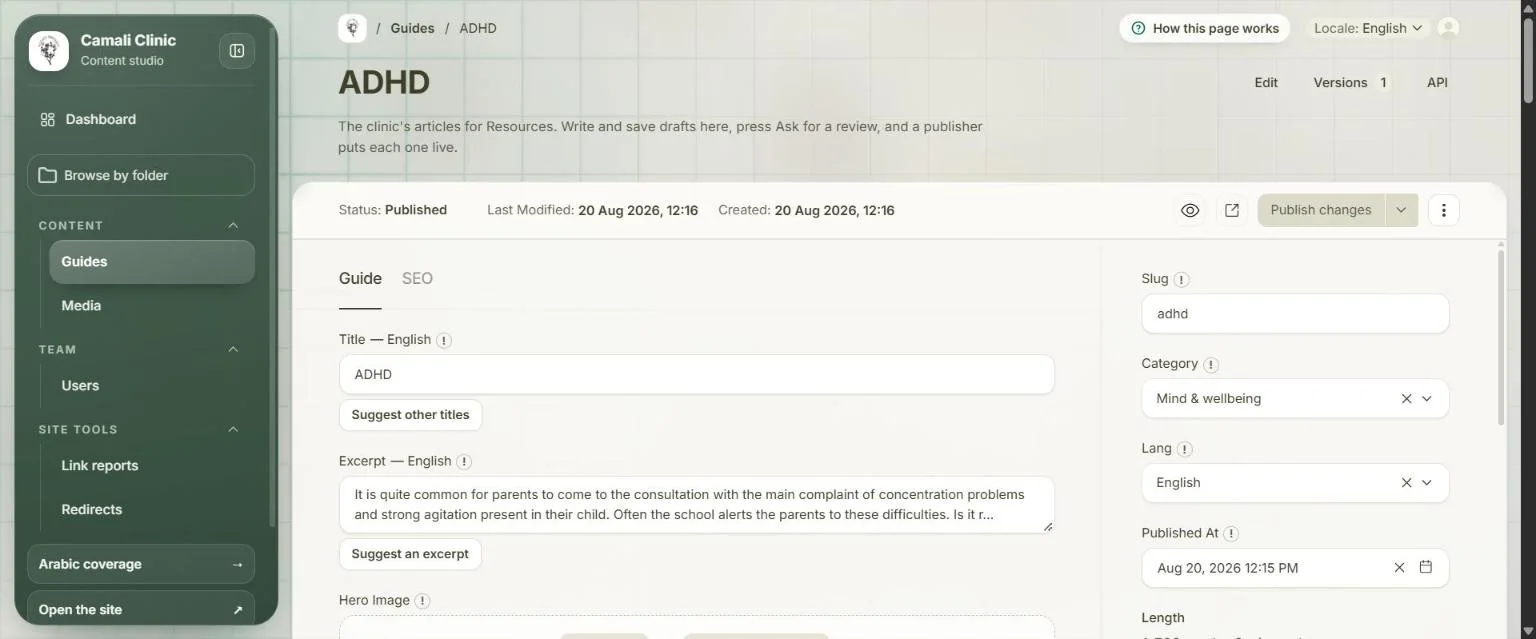
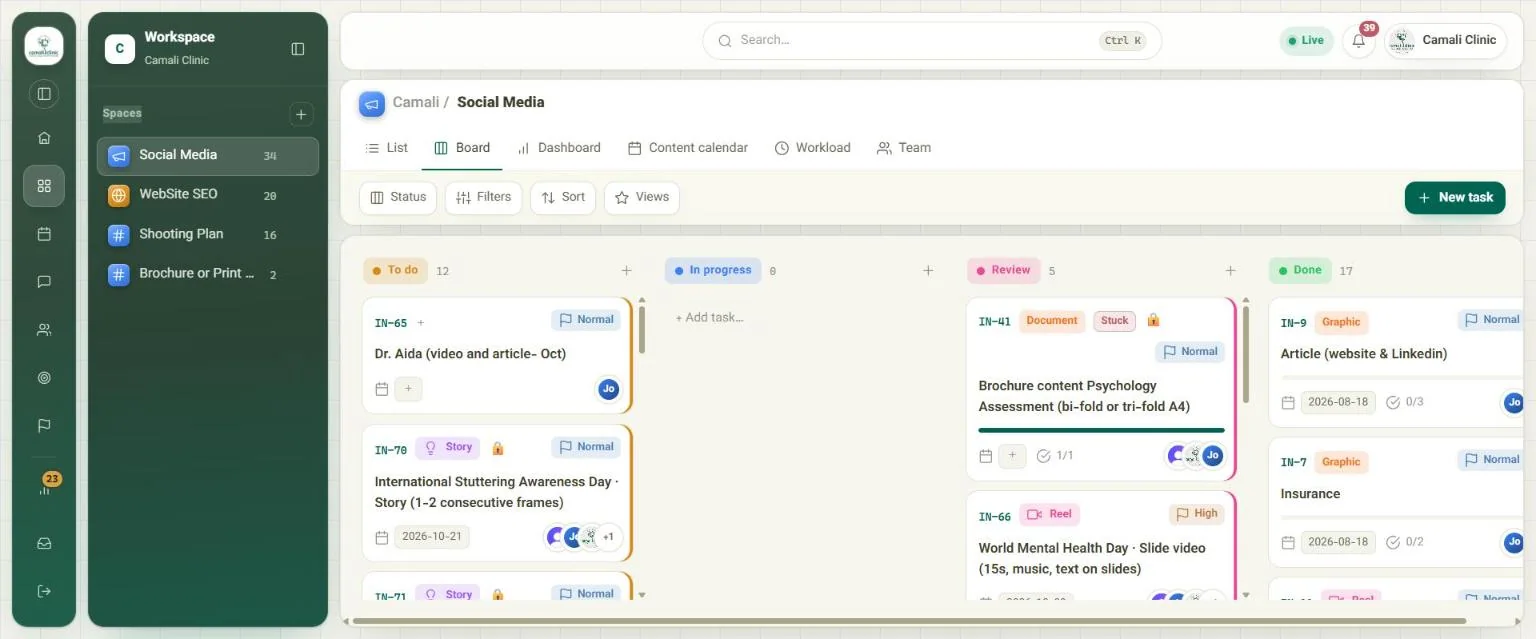
We prototyped ten full design directions, and the clinic chose and combined sections into one final design, which a build pipeline turned into server-rendered Next.js pages. Clinicians, insurers, testimonials and guides moved into a database, the appointment form asks for contact details only, and Arabic pages mirror the layout right-to-left with dedicated Arabic typefaces, with the old WordPress addresses mapped onto the new structure. One application serves that public site, the staff console and the publishing studio, so one database and one sign in sit behind all three. In the console each team sees only its own area, and the database decides that, not the menu: a request can be moved on but never rewritten, every email is written down with the answer the mail service gave, and requests are deleted on a fixed clock while their counts are closed into a monthly archive that holds numbers only. The studio carries a guide from a first draft through review and clinical approval to a live page, with four roles, 15 readiness checks and an assistant that suggests titles and excerpts but can never publish. The team's own workspace is a separate system with its own sign in and its own database, so the team's plans never sit behind the same key as the enquiries the website receives.
What we built
- Live on camaliclinic.com since 21 September 2026
- An Arabic mirror of the site, laid out right to left
- Appointment requests that ask for no medical details
- Each team sees only its own area, decided by the database
- Requests deleted on a fixed clock, their counts kept for ever
- 15 readiness checks before a guide can go live
The outcome
The site went live on camaliclinic.com on 21 September 2026, five weeks after the first line of code, and the console went in team by team in the week that followed. The sitemap carries 267 addresses, 176 in English and 91 in Arabic, among them 39 condition and therapy pages and 70 guides. On 27 September 2026 the desktop home page scored 98 for performance, 98 for accessibility and 100 for best practices in Google's PageSpeed Insights, where the old site had scored 87 and 65 in July; securityheaders.com graded the live site A+ on 26 September 2026. All 1,836 images carry a text description, no advertising or behaviour tracker loads on any page about care, and the clinic now publishes its own guides and keeps its history as counts rather than as records of people.
The parts of the system
The public website
Since 21 September 2026 camaliclinic.com has run on the clinic's own application, with an Arabic mirror built beside it. Service pages, clinicians and guides are drawn from data rather than written one by one, site search covers all of them in both languages and tolerates a typo, and the appointment form asks for contact details only.
The staff console, the publishing studio and the team desk
The half the clinic works in. Each team answers what the website brings in from a console where the database, not the menu, decides who sees what; the studio takes a guide from a first draft to a live page; and the team plans its month in a workspace that is a separate system with its own sign in. These sit behind the clinic's own sign in, so the pictures below carry no address.
Have something similar in mind?
Send us the brief. We'll tell you honestly whether we're the right studio for it.
No pitch decks until we understand the problem.
hello@4ai.ae